


Hi-Rummy-India as a Real-Money Rummy Platform
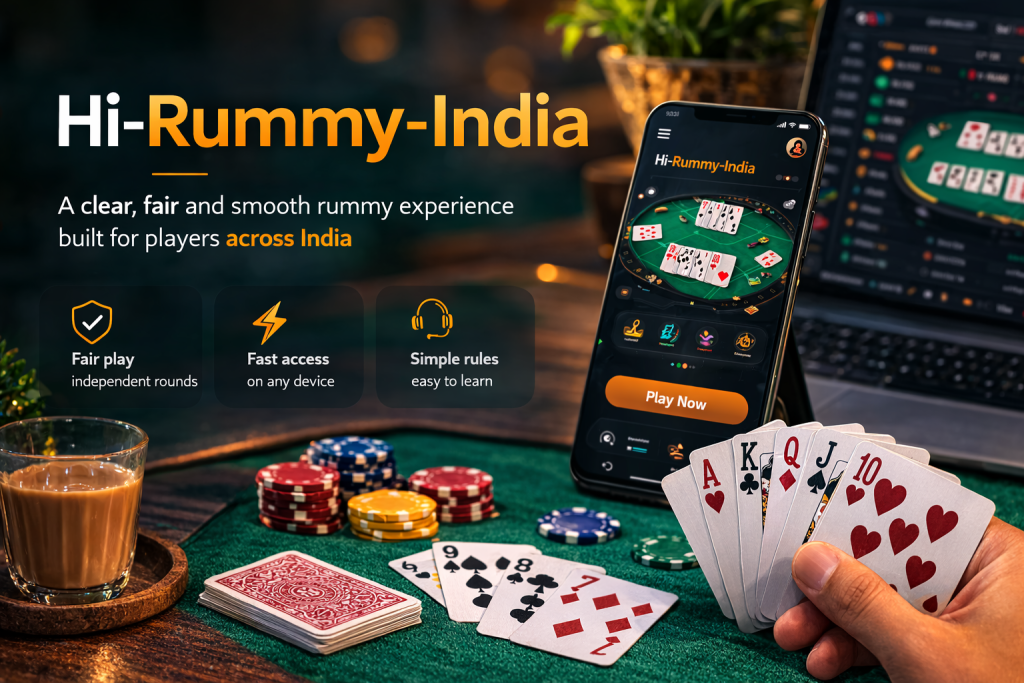
Hi-Rummy-India can be positioned as a product-led rummy platform built around structure, access, and session clarity rather than aggressive promotional messaging. On a strong homepage, the first job is not to overstate outcomes or create pressure. The first job is to explain what the platform is, how the environment works, and what kind of gameplay users can expect when they enter the lobby. For a rummy product, this matters more than visual noise because players usually make decisions based on format visibility, table understanding, wallet logic, and confidence in the interface. A homepage should therefore feel stable, readable, and operational, with enough detail to make the platform understandable on both mobile and desktop without forcing the user to dig through secondary pages too early.
A Homepage Should Explain the Product Before It Sells It
For Hi-Rummy-India, the homepage should behave like a front layer of the product, not like an advertisement disguised as content. That means describing the service in plain terms: users come to the platform to access rummy tables, move through different play conditions, understand stake differences, and manage short or extended sessions in a controlled environment. The tone should remain measured because rummy is not improved by exaggerated copy. Trust comes from clean presentation of game access, account flow, support visibility, and transparent explanation of what the user can do once logged in. When a homepage is written this way, it strengthens brand perception because it feels like part of the platform experience, not like a detached SEO page trying to push traffic into conversion language.
Mobile Access, Table Visibility, and Session Readability
A strong rummy homepage for the Indian market also needs to reflect how people actually approach the product across devices. Many users discover or revisit the platform from mobile first, often in short windows of time, which means readability, tap comfort, and fast interpretation of information matter more than decorative complexity. The homepage should make the platform feel easy to scan: game categories should be understandable, wallet-related navigation should feel close at hand, and the difference between learning, entering, and continuing play should be visually and textually clear. On desktop, the same logic still applies, but with more room for comparison and browsing. Good homepage copy supports both contexts by keeping the structure crisp, the wording direct, and the expectations realistic without losing product atmosphere.
Rummy Is a Format Product, Not Just a Generic Casino Entry Point
One of the biggest mistakes on gaming pages is to treat all real-money entertainment products as if they can be described with the same language. Rummy needs a different frame. It is not a passive spin product and it is not something that should be described through jackpot-style wording. It is a format-based card environment where users pay attention to table type, room structure, pacing, and decision rhythm. That is why the homepage for Hi-Rummy-India should communicate platform design through utility: where users start, how they compare play options, how the interface supports repeat visits, and how the product remains legible over time. This approach creates more authority than hype because it respects the fact that users are evaluating an actual service, not just reacting to emotional triggers.
Product Confidence Comes From Clarity, Not From Noise
When a brand wants to look credible in the Indian rummy segment, its homepage should show confidence through restraint. That means clear headings, strong information hierarchy, clean descriptions of platform access, and content that sounds like it comes from a product team. Instead of pushing exaggerated excitement, the page should reduce uncertainty. Users should quickly understand that Hi-Rummy-India is built around accessible gameplay entry, readable table logic, and a smoother path between landing, account use, and table participation. This kind of copy does more than improve readability. It shapes trust. It tells the user that the platform understands its own product, respects the player’s attention, and is prepared to explain the service in a calm, controlled, and transparent way.
Understanding Rummy Game Formats on Hi-Rummy-India
A rummy platform becomes easier to trust when the available formats are explained clearly. On Hi-Rummy-India, the homepage should not only present the existence of tables but also explain how players typically move between them. Rummy environments usually revolve around structured rooms where the key difference is entry level, table pace, and whether the session is practice-oriented or played with real wallet balance. When players open the lobby, they are not simply choosing a random game. They are selecting a format that determines how the round behaves, how long the session may last, and how the table rotates between participants. A good homepage therefore helps visitors interpret the lobby before they even open the application. This reduces confusion and helps the platform feel transparent from the first interaction.
Practice Tables and Real-Money Tables
Most Indian rummy platforms separate two main entry paths: exploration tables and real-stake tables. Exploration tables exist so players can understand the interface and the card arrangement logic before engaging with real-money rooms. These tables typically mirror the same mechanics, the same round structure, and the same deck behaviour. The difference is simply that the wallet layer is not active. Once players feel comfortable with the interface, they can move into real-money tables where entry values define the table environment. The homepage should explain this transition clearly because it demonstrates that the platform respects learning curves. It also reassures users that the system does not force immediate real-money engagement. Instead, it allows players to move gradually from observation to participation, which is a healthier product experience.
Table Selection and Entry Levels
Another element worth explaining on the homepage is how table selection works. Rummy platforms usually organize tables by entry level rather than by difficulty or promotional labels. This is important because it prevents misunderstandings about outcomes. Entry level defines the participation requirement, not the probability of winning a hand. Each round is independent, and the mechanics remain consistent regardless of the table value. By clarifying this on the homepage, Hi-Rummy-India positions itself as a platform that prioritizes clarity over marketing language. Players can compare tables, decide how much time they want to spend in a session, and choose environments that match their comfort level. This type of explanation strengthens brand perception because it shows the product as a system with rules rather than a promotional funnel.
Rummy Table Types Overview
Rummy Table Formats at a Glance
This overview helps users compare table environments by purpose, entry profile, session rhythm, and onboarding suitability. It does not imply better outcomes at higher entry levels. It simply explains how the lobby may be structured and how a player can choose a format that feels clearer and more manageable.
| Purpose | Fit profile | |||
|---|---|---|---|---|
Practice Tables
Low-pressure entry
Useful for understanding table flow, card layout, and interface rhythm before wallet-based play. | Built for exploration. These tables help users read the interface, understand pacing, and become comfortable with gameplay structure in a lower-pressure environment. |
Entry exposure is minimal because the main purpose is familiarisation rather than active wallet use. Entry profile: introductory |
Usually shorter sessions focused on observation, adaptation, and interface comfort rather than extended competitive rhythm. Pace: lighter and easier to scan | Good for new users |
Low Entry Rooms
Accessible sessions
A practical step after practice tables for users who want real play with a lighter participation threshold. | Designed for casual real-money sessions where the player wants straightforward access, modest entry conditions, and manageable table commitment. |
Entry expectations remain controlled and easier to approach than mid or high participation rooms. Entry profile: low |
Often suited to flexible play windows where users want a clear route into tables without committing to a heavier session structure. Pace: moderate and flexible | Good for regular casual play |
Standard Tables
Core lobby format
Often the central format for returning users who already understand the platform and want a more stable session shape. | Offers a balanced environment between accessibility and commitment, making it useful for users who already understand the platform’s flow and selection logic. |
Entry requirements are more established than lower rooms, though still centred on usability rather than aggressive escalation. Entry profile: medium |
Session rhythm tends to feel more deliberate, with players often staying longer and comparing table conditions more carefully. Pace: steady and more focused | Suitable for returning users |
High Entry Rooms
Higher commitment
These rooms are better read as higher participation environments, not as places with improved odds or different card logic. | Built for users comfortable with larger participation levels and more deliberate session intent, while the game logic itself remains structurally consistent. |
Entry exposure is more substantial, so the main consideration is session comfort and wallet discipline rather than expectation of different outcomes. Entry profile: higher |
Usually associated with more focused sessions where players approach table choice with greater care and less exploratory behaviour. Pace: focused and committed | For comfortable, experienced users |
Table Selection Should Explain Conditions, Not Sell Emotion
A homepage table should help the user compare table environments without turning the comparison into a sales device. That is why this layout works better for Hi-Rummy-India. It keeps the focus on participation structure, onboarding fit, and session rhythm rather than on exaggerated claims. A player should be able to scan the table and understand which format is better for learning, which one is more suitable for routine casual play, and which one requires a more deliberate level of wallet comfort. This kind of comparison improves usability because it reflects how real product decisions are made. It also supports trust by making it clear that a higher entry room does not change the underlying card logic or create better chances. It only changes the session context and the participation level.
Fairness, Card Distribution, and Platform Integrity
A strong rummy homepage should explain fairness in a practical way rather than hiding it behind generic trust language. For Hi-Rummy-India, this means describing the platform as a structured card environment where round outcomes are generated independently and where the system does not adjust future deals based on previous hands. Many players approach card products with assumptions that a losing sequence will eventually trigger compensation or that a recent winning table may suddenly become less favourable. That is not a useful way to understand digital rummy. A well-written homepage should reduce those misconceptions by showing that each round begins as its own event. The platform can manage access, account controls, and table availability, but it should not be described as shaping the underlying card outcome to reward or punish a recent pattern of play.
Randomness in Rummy Should Be Explained Calmly
Even though rummy is a skill-led card format in many player conversations, the card distribution layer still needs to be framed correctly. The homepage should explain that shuffle and deal logic operate independently from the emotional narrative players may attach to a session. A short sequence of difficult hands does not prove bias, just as a good run does not prove that a player has entered a special table state. The right way to explain this is to focus on distribution logic rather than superstition. Digital card dealing should be understood as a controlled random process that resets at the start of each new hand. That makes the product easier to understand and prevents the homepage from feeding myths about “hot tables” or “cooling accounts.” Calm language here matters because it positions the brand as responsible and product-aware.
Independent Hands Do Not Create Compensations
One of the most important fairness points on any real-money game page is the idea of independence. If one hand ends badly, the next hand does not begin with an invisible adjustment designed to even things out. If a player has won several times in a row, the system should not be described as preparing a balancing response. This independence principle helps users think more clearly about what they are seeing on the screen. In rummy, players may improve decision quality, table selection, and session discipline, but they should not read patterns into the system that are not actually there. The homepage for Hi-Rummy-India should make that distinction visible. It can present the platform as structured, stable, and fair without drifting into misleading claims about outcome management or behavioural compensation inside the game flow.

Terms, Wallet Logic, and Rule Visibility Matter More Than Hype
Trust on a rummy platform does not come only from saying that the product is secure. It comes from making the rules legible. That includes clear visibility around account use, deposits, withdrawals, participation conditions, and how promotional layers sit separately from the core game. A homepage should help users understand that wallet management is one system and gameplay logic is another. Bonus state, if available on the platform, may affect eligibility conditions, release requirements, or restricted balances, but it should not be described as improving a hand, changing distribution logic, or increasing the quality of the table. This separation is important. It protects the product from exaggerated messaging and helps the user understand which parts of the experience belong to the game itself and which parts belong to account administration or promotional terms.
Product Integrity Is a Better Signal Than Promotional Volume
For Hi-Rummy-India, a homepage becomes stronger when it treats integrity as a visible product feature. That means straightforward language, consistent rule framing, and an interface logic that does not depend on pressure tactics. Players should feel that the platform is willing to explain how tables work, how sessions begin, and how the account layer is managed. This creates more confidence than inflated promises ever could. It also aligns better with the way experienced users evaluate gaming products. They look for readable conditions, coherent structure, and a stable connection between what the homepage says and what the product actually does after login. When that connection is strong, the platform feels more credible. When it is weak, even attractive design cannot carry the brand very far.
Session Rhythm, Decision Layers, and Gameplay Readability
A good rummy homepage should help users understand that a session is not defined only by entry value or by whether the table is labelled for casual or more focused play. Session quality is also shaped by rhythm. On Hi-Rummy-India, the homepage should explain that rhythm comes from a mix of table selection, decision speed, interface clarity, and the amount of attention a player brings into each hand. Some users enter for short sessions during small breaks, while others prefer a more deliberate sequence of rounds with fewer interruptions and more comparison between table conditions. Neither approach is automatically better. The difference is in pacing, attention span, and comfort with the flow of the lobby. When the homepage explains this clearly, it helps the platform feel better organised because users can place themselves inside a play pattern instead of reacting only to surface labels.
Short Sessions and Longer Sessions Behave Differently
It is useful for the homepage to distinguish between short-format and longer-format user behaviour without turning that into a performance claim. A short session is often more reactive. The player enters quickly, scans fewer options, and focuses on immediate table access. A longer session usually involves more comparison, more careful movement through the lobby, and more awareness of wallet state, session duration, and overall concentration. This does not mean that longer sessions are smarter or more profitable. It simply means that the user experience becomes more layered as time expands. By describing this difference, Hi-Rummy-India can present itself as a platform that understands how real users interact with the product. That creates a more mature homepage because the content reflects actual platform behaviour rather than generic promises or decorative copy that says very little.
Good Product Design Supports Better Session Control
Another reason to discuss session rhythm on the homepage is that rhythm is strongly connected to control. Players are more likely to navigate responsibly when the product makes time, table choice, and wallet state easy to understand. A rushed or cluttered interface tends to produce weaker decision quality because it interrupts the player’s ability to read what is happening. A cleaner interface encourages steadier behaviour. On Hi-Rummy-India, that principle should be visible in the way the homepage describes the platform: tables are compared through structure, not noise; account actions are explained through utility, not pressure; and gameplay access is presented as a controlled environment, not as an urgent opportunity. This type of framing improves brand confidence because it shows that the platform values readable use patterns. It also fits mobile behaviour well, where people often need to interpret information quickly and continue only when the session still feels manageable.
Session Rhythm Model
How Session Rhythm Can Change Across a Typical Visit
This visual does not measure profit, return, or outcome strength. It simply illustrates how attention, comparison behaviour, and decision intensity may evolve as a player moves through a short, medium, or more deliberate rummy session on the platform.
A Better Homepage Describes Behaviour Without Making Promises
This kind of visual works well on a homepage because it explains usage patterns without pretending that gameplay follows a guaranteed path. The graph is useful because it gives structure to the idea of a session. Instead of presenting rummy as a flat activity, it shows that the player experience changes from entry to active play and from active play to exit. This is valuable on a product page because it teaches users how to think about the platform. It encourages them to view table choice, attention, and pacing as part of the experience rather than as invisible forces acting on their outcomes. For Hi-Rummy-India, that is the right tone. The homepage should create clarity around behaviour, not fantasy around results. That makes the brand feel more mature, and it gives the design a stronger editorial purpose.
Payments, Account Access, and Platform Usability
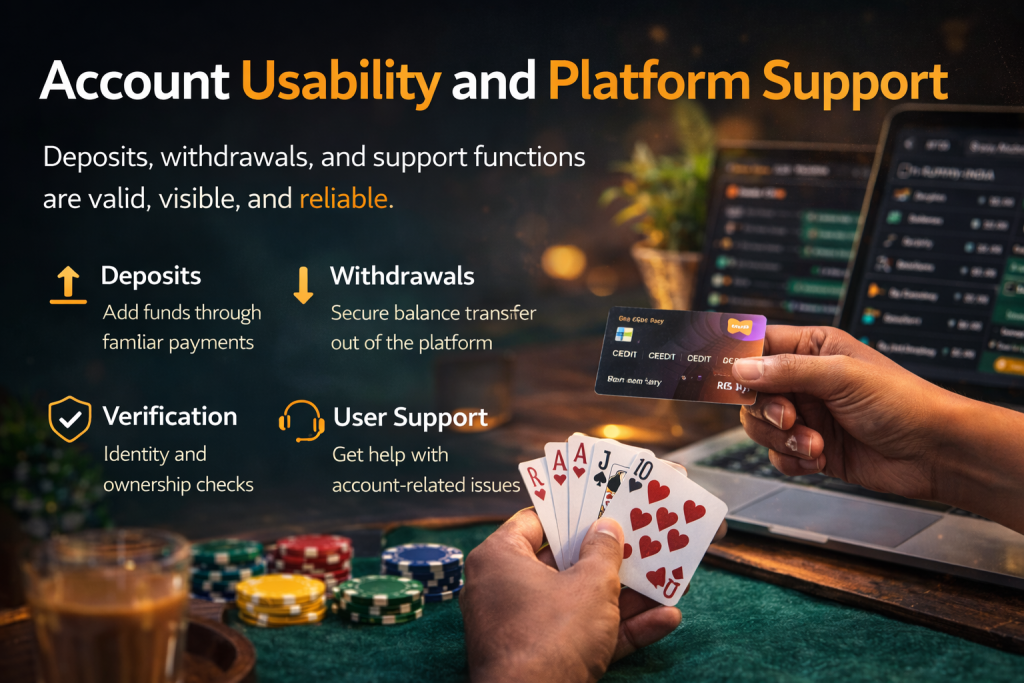
A rummy platform becomes easier to trust when financial actions are explained as part of the product rather than as a hidden technical layer. For Hi-Rummy-India, the homepage should make it clear that account management, deposits, withdrawals, and balance visibility belong to a structured wallet system that sits next to gameplay but does not interfere with card distribution or round outcomes. This distinction is important because many players assume that financial activity may somehow influence how a table behaves. In reality, wallet operations are administrative. They manage balance movement, transaction validation, and account security, while the rummy table itself remains an independent gameplay environment. Explaining this separation on the homepage helps reduce misconceptions and allows the platform to present itself as transparent and operationally stable.
Deposits, Withdrawals, and Account Clarity
When users arrive on the platform, one of the first practical questions is how easily they can move funds in and out of their account. A strong homepage does not promise instant profits or exaggerated rewards. Instead, it describes the clarity of the process. Deposits should be visible inside the account interface, usually supported by familiar payment systems in the Indian digital ecosystem. Withdrawals should follow defined verification checks so the platform can confirm identity and protect account ownership. These checks are not obstacles but safeguards designed to prevent misuse and ensure that balances remain connected to the correct player profile. When the homepage describes this calmly, it shows that Hi-Rummy-India treats the financial layer as a regulated system rather than as a marketing feature.
Support Visibility and User Assistance
Another important element of a well-structured homepage is the presence of support access. Players should not feel that assistance exists only after something goes wrong. Instead, support should be framed as part of the everyday usability of the platform. That means clear help links, readable explanations of account functions, and guidance on how to resolve common issues such as login recovery, payment verification, or gameplay navigation. A rummy platform with visible support infrastructure feels more reliable because users know that questions can be answered without searching through multiple pages. Hi-Rummy-India should present support as a quiet but constant presence in the product environment. This strengthens the perception that the platform is built for long-term use rather than short bursts of promotional attention.
Platform Access and Operational Features
Platform Access and Account Operations
| Platform feature | Description | User relevance |
|---|---|---|
| Deposits | Users can move funds into their account through supported payment systems available within the Indian digital payment ecosystem. | Provides balance for entering real-money rummy tables. |
| Withdrawals | Balance can be withdrawn from the account after verification checks confirm identity and ownership of the profile. | Allows players to transfer available funds out of the platform. |
| Account Verification | Identity checks protect the platform from misuse and ensure financial activity is connected to the correct user. | Improves security and protects account ownership. |
| User Support | Players can contact the support team to resolve login issues, payment questions, or gameplay navigation concerns. | Provides assistance and troubleshooting. |
A Homepage Should End With Operational Clarity
The final part of a homepage should reinforce usability rather than push emotional messaging. After reading about gameplay structure, fairness logic, and session rhythm, the user should feel that the remaining step is simply understanding how the platform operates day to day. That includes deposits, withdrawals, support access, and account verification. These elements are not decorative features. They form the infrastructure that allows the rummy environment to function reliably. When Hi-Rummy-India presents this information calmly and directly, the homepage becomes a practical introduction to the service rather than a promotional page. The reader leaves with a clear picture of what the platform does, how it behaves, and how to navigate it. This clarity strengthens brand perception because it shows that the platform is comfortable explaining its product without relying on exaggerated claims.