

Indian Cash Catcher — Game Structure and Platform Behavior
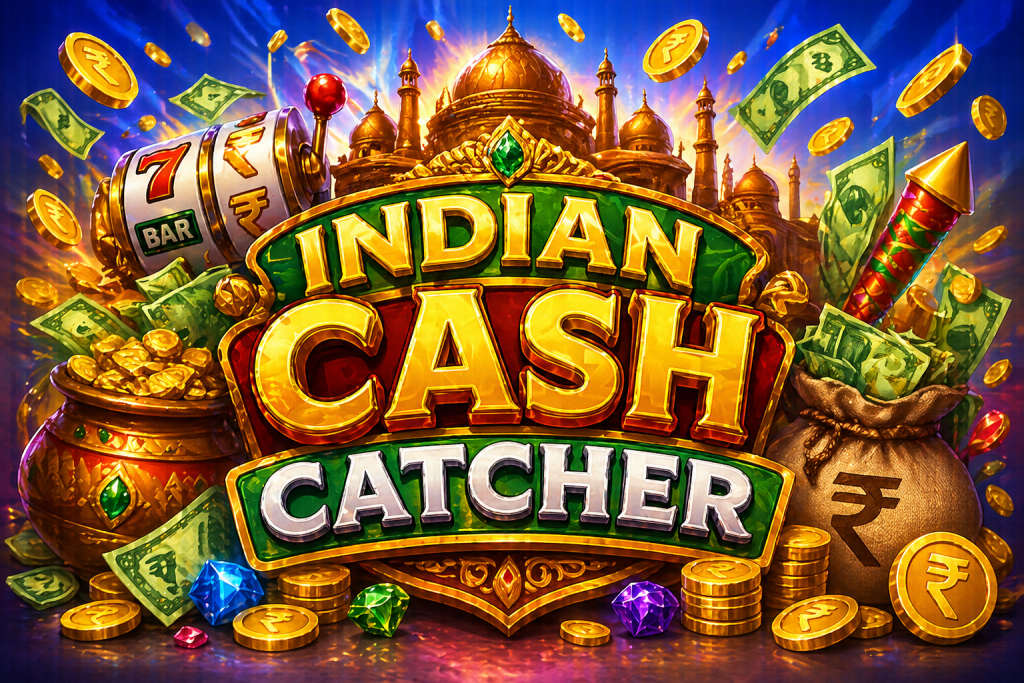
Indian Cash Catcher on Hi Rummy should be approached as a slot-style product built around fast cycles, visual feedback and independent round resolution. Despite its regional theme and familiar visual elements, the underlying logic follows the same structure as other RNG-based slot games. Each round is generated independently, without reference to previous outcomes, player history or session length.
The game is presented with symbols, animated feedback and a “catch” mechanic that visually suggests collection or accumulation. This visual framing can create the impression that the player is building toward something across multiple spins. In practice, each round remains self-contained. The appearance of coins, cash symbols or accumulation effects belongs to the presentation layer. It does not indicate that the system is tracking progress toward a guaranteed outcome.
Inside Hi Rummy, Indian Cash Catcher operates within a broader platform environment. The game layer is responsible for resolving spins. The platform layer handles balance display, transaction flow, bonus activation and account state. These layers should be understood separately. A spin result is generated first. After that, the platform determines how the result is recorded — whether as cash balance, bonus funds or restricted winnings.
This separation is important because users often associate themed mechanics with system behaviour. For example, a “cash catcher” feature may feel like a persistent mechanic across spins. However, the actual logic does not retain memory between rounds. The RNG does not accumulate missed outcomes and then release them later. It also does not increase the probability of a specific result because the player has experienced a sequence of low-value rounds.
RTP in Indian Cash Catcher follows the same principle. It is a long-term theoretical model that describes how value is distributed across a very large number of rounds. It does not describe what will happen in a short session. A player may see outcomes that are far above or below the theoretical level within a limited number of spins. This is normal behaviour in any RNG-based slot environment.
Volatility defines how outcomes are distributed. A game may feel active because of frequent visual feedback, but that does not necessarily mean frequent high-value results. Indian Cash Catcher may present many visual events while still distributing value unevenly across a session. This is why volatility should be understood as structure, not as advantage.
Indian Cash Catcher Product Structure
| Layer | Description | Type | Note |
|---|---|---|---|
| Game Screen | Displays symbols, catch mechanics and animations. | Game Layer | Visual feedback does not indicate future results. |
| RNG Engine | Resolves each spin independently. | Outcome Layer | No memory, no correction. |
| Wallet | Tracks balance and results. | Platform Layer | Records outcomes after they happen. |
| Bonus System | Applies promotional rules. | Rule Layer | Does not affect game logic. |
This framing keeps the page aligned with a product-level perspective. Indian Cash Catcher is not presented as a system that can be influenced or predicted. It is presented as a structured game environment with clear boundaries between outcome generation and platform control. That clarity is more valuable than promotional language because it reduces misinterpretation and improves user understanding of how the game actually behaves.
RTP, RNG and Volatility Model in Indian Cash Catcher
Indian Cash Catcher is often perceived as a more “active” slot because of its visual theme and the way symbols appear to accumulate or interact. That perception needs to be separated from how the underlying system actually behaves. The game does not track progress between spins. It does not build toward a guaranteed result. Each round is resolved independently, and the structure of the model should be explained through RTP, RNG and volatility.
RNG is the foundation. Every spin is generated without reference to the previous one. A sequence of low-value outcomes does not trigger a correction. A sequence of visually rich rounds does not reduce the next outcome. The system does not attempt to balance a session in real time. This is important because the “catch” mechanic may visually suggest accumulation, but that accumulation exists only within the boundaries of a single round.
RTP describes the theoretical distribution of value across a very large number of spins. It is not a short-term expectation. In a short session on Hi Rummy, the player may experience outcomes that feel inconsistent with the long-term model. This is not an anomaly. It is a natural result of limited sample size. The RTP model becomes meaningful only across extended play, not across a few minutes or a small number of rounds.
Volatility explains how those values are distributed. Indian Cash Catcher may present frequent visual events — coin drops, catch animations, symbol highlights — but these do not guarantee frequent high-value outcomes. A game can feel active while still distributing value unevenly. Volatility is about that distribution shape, not about how “good” or “bad” a game is.
Indian Cash Catcher — Core Model Breakdown
This graph separates perception from actual mechanics. It does not represent performance or expected outcomes.
From a product standpoint, the key message is consistency of logic. Indian Cash Catcher may look dynamic, but it follows the same mathematical structure as other slot games. The player is not interacting with a system that adapts to behaviour or adjusts outcomes based on previous spins. The interaction is limited to stake choice, session duration and optional bonus activation.
This is where user control becomes relevant. Since the outcome layer cannot be influenced, the only meaningful decisions are around session management. Setting a clear stake, defining a time window and understanding whether a bonus is active are more effective than trying to interpret patterns in recent results. The platform supports these decisions through balance visibility, clear rules and mobile-friendly layout.
Hi Rummy’s role is to keep these elements transparent. The page should not imply that the game becomes more favourable under certain conditions. Instead, it should show that Indian Cash Catcher is a visually engaging slot with independent outcomes, long-term theoretical structure and a distribution model that can vary significantly over short sessions.
Bonus Layer, Free Spins and Wagering Logic
Indian Cash Catcher may include promotional elements such as free spins, bonus funds or limited-time offers within Hi Rummy. These elements do not belong to the game engine itself. They operate as a separate rule layer that defines how balance is used, restricted and eventually released. The spin outcome remains unchanged regardless of whether a bonus is active or not.
The most visible change appears in the wallet. When a bonus is applied, the user may see a shift from a standard cash balance to a mixed or restricted balance state. This means that while the game continues to resolve spins normally, the result may be handled differently by the system. Winnings can be credited as bonus funds rather than immediately withdrawable balance. This is not a change in the game — it is a change in how the platform processes the outcome.
Wagering defines the conditions under which those restricted funds can be released. It should be understood as a volume requirement. If a promotion requires a certain multiple of play, the user must complete that amount of eligible staking before the balance can transition to a withdrawable state. This process does not influence the randomness of the game or improve the likelihood of specific outcomes. It only controls access to funds already generated through gameplay.
Free spins follow the same separation. They provide access to rounds without using the main balance, but the outcome of each round is still governed by the same RNG logic. The result may be placed into a restricted balance depending on the promotion terms. Again, the difference lies in the accounting layer, not in the spin mechanics.
Bonus Rule Structure — Indian Cash Catcher
| Element | Function | Game Impact | Platform Effect |
|---|---|---|---|
| Free Spins | Access to rounds without direct cash usage | No effect on RNG | Results may be restricted |
| Bonus Funds | Separate balance under conditions | No effect on RTP | Locked until wagering is met |
| Wagering | Defines required play volume | No mechanical change | Controls withdrawal eligibility |
| Game Contribution | Defines eligible play | No effect | Limits which games count |
This separation between game logic and platform rules is critical for a clear product presentation. Without it, users may interpret promotional features as influencing outcomes. In reality, the promotional system only changes how results are handled after the spin. Indian Cash Catcher continues to function as an independent slot regardless of bonus status.
From an operator perspective, this is where clarity builds trust. When the page explains that bonuses are optional, conditional and separate from the game engine, the user can make more informed decisions. The experience becomes more transparent, especially on mobile where balance indicators, spin controls and promotional messages are displayed in close proximity.
Mobile UX, Session Control and Player Awareness
Indian Cash Catcher is designed for fast interaction, and on mobile this speed becomes even more pronounced. The layout on Hi Rummy typically places spin controls, balance indicators and promotional elements within a compact screen. This creates a smooth entry into the game, but it also increases the pace of decision-making. A player can complete many rounds in a short period without noticing how quickly the session evolves.
The interface itself does not change how the game behaves. It only changes how the player experiences it. A smaller screen may simplify interaction, but it does not simplify the underlying mathematics. The RNG remains independent, the RTP remains a long-term model, and volatility continues to shape how values are distributed. The mobile environment simply compresses these elements into a faster visual rhythm.
For that reason, session control becomes more important than result interpretation. Since the player cannot influence the outcome layer, the only meaningful control points are external: stake size, session duration and awareness of balance state. A clear view of whether the session is using cash balance or bonus funds is especially important. Without that distinction, users may misread balance changes or assume that a restriction is related to the game rather than to the platform rules.
Session Awareness Model — Indian Cash Catcher
This graph shows how different elements support user control during a session. It does not represent outcomes or performance.
A well-structured page should guide the player toward awareness rather than expectation. Indian Cash Catcher is not a system that becomes more favourable over time or more predictable through observation. It is a sequence of independent rounds presented through a fast, visually engaging interface. The user’s control exists outside the outcome layer.
This is where responsible framing becomes part of the product, not an add-on. Setting a session limit, choosing a stable stake and understanding when to pause are more useful than reacting to perceived patterns. The platform supports these decisions through clear balance display, visible rules and a consistent interface across devices.
Hi Rummy’s role is to maintain that clarity. Indian Cash Catcher provides the game experience. The platform provides the structure around it. When these roles are clearly separated, the user can interact with the product without confusion, without false expectations and without relying on patterns that do not exist in the underlying system.